


2026 UI Design Trends Worth Watching: From Mobile‑First to Spatial Intelligence
2026 / 01 / 09
With the maturation of technologies such as artificial intelligence, WebGPU, and spatial computing, the paradigm of UI design is gradually shifting from "screen creation" toward "experience orchestration." In digitally advanced cities like Hong Kong, a business's grasp of UI design trends not only impacts brand image but also directly determines user trust and conversion rates.
The UI design paradigms of the past decade—mobile-first, flat design, and static design systems—are now being replaced by a new wave characterized by greater dynamism, intelligence, and immersion.
This signifies that 2026's UI design will no longer focus merely on the aesthetic refinement of interfaces but will delve deep into the underlying logic of interaction!
In particular, the proliferation of spatial computing devices, coupled with users reaching peak awareness of digital addiction, is compelling design to shift from "competing for attention" to "respecting attention." These changes are being integrated into design trends in various forms.
UI Design Trend #1: Generative Interfaces—AI-Driven Instant Design
Feature: Interfaces are no longer fixed but are generated in real-time by AI based on user intent.
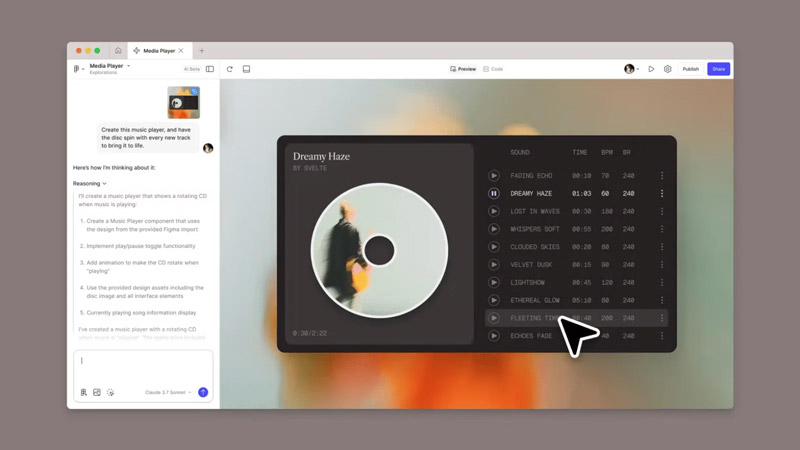
Web interfaces in 2026 are undergoing the most profound transformation since 1976. Traditional UI design workflows rely on designers pre-defining every screen, every state, and every navigation logic. Generative UI completely shatters this model.
Under the concept of generative UI, a webpage is no longer a pre-drawn, static image. Instead, it is dynamically recomposed by AI within milliseconds, based on the user's real-time intent, contextual environment, and device state. This means two different users visiting the same website may see entirely different interface layouts.
From the perspective of Hong Kong's UI design practice, this shift signifies that the design object changes from "pages" to "component relationships" and "generation rules." User actions (such as voice commands, vague search terms, or click behavior) are parsed by on-device small models into specific, structured intents. The AI system then retrieves atomic components from the design system library that comply with brand guidelines and arranges them in real-time based on the current screen size, user preferences, and task priority, generating a temporary, disposable UI.
UI Design Trend #2: Liquid Glass Aesthetics—A New Language of Digital Materiality
Feature: Dynamic effects like motion blur, specular highlights, and light-shadow interplay—characteristic of liquid glass—will become one of the mainstream aesthetics of 2026.
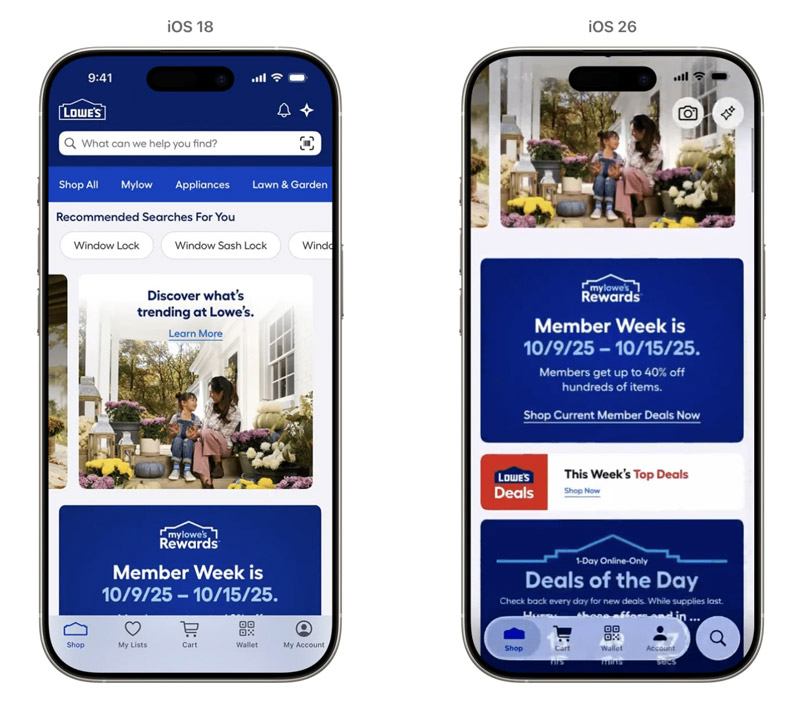
If the flat design of the 2010s was an adaptation to low-resolution screens and performance-constrained mobile processors, then the "liquid glass" aesthetics of 2026 are a natural product of hardware performance surplus and leaps in screen display technology.
This trend was ignited by Apple's operating system updates announced at WWDC 2025 and rapidly spread throughout the digital design field. "Liquid glass" is not a simple return to skeuomorphism but a highly dynamic digital material with physical properties.
When a user scrolls a list, the underlying content not only blurs but also produces trailing effects similar to fluid flowing over a glass surface. The edges of buttons and cards display flowing highlights based on the tilt angle detected by the device's gyroscope.
Through precise optical blurring and depth layering, designers can clearly present foreground operation areas without obstructing background content. This aesthetic provides a means of differentiation that was largely lost during the flat design era.
UI Design Trend #3: Multimodal Interaction—Beyond Clicking and Swiping
Feature: 2026's UI design trends are no longer confined to mouse and touch; voice, gesture, eye-tracking, and even emotion recognition become standard input methods.
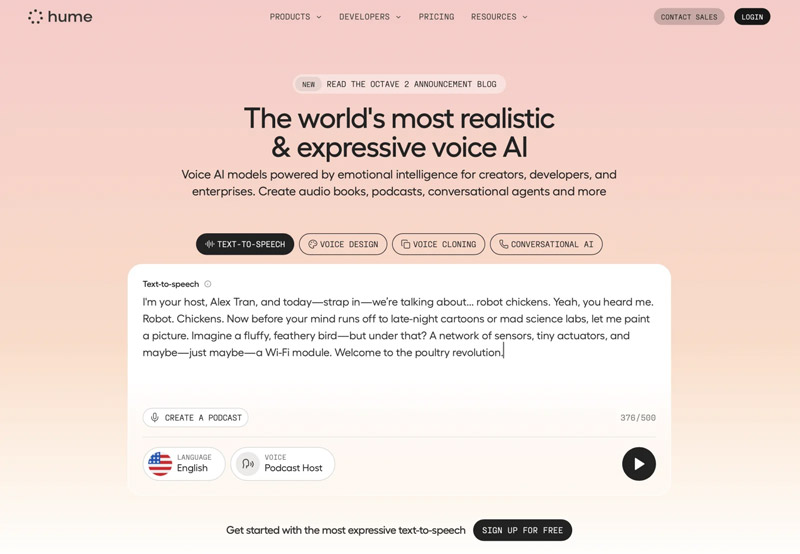
Interaction design in 2026 officially bids farewell to the era where "clicking" and "swiping" were the absolute core, entering a new phase of multimodal coexistence. With the commoditization of sensor technology and qualitative leaps in AI semantic understanding, voice, gesture, eye-tracking, and even facial micro-expressions have become standard, first-class input methods.
The hallmark of this shift is the "fluidity of input methods." Users no longer need to explicitly switch modes. While viewing a website, a user can type, use voice to supplement a query, and use eye gaze on a corner of the screen to summon reference materials simultaneously. The system can seamlessly integrate these three inputs to understand the user's comprehensive intent.
For example, in the automotive sector, multimodal interaction has become standard for some Hong Kong automaker websites. These designs transform the entire webpage into an interactive area, combining augmented reality (AR) to present product information directly within the user's field of view.
UI Design Trend #4: Spatialized Storytelling—Breaking Planar Limitations
Feature: Scrolling no longer just moves the viewport; it drives narrative logic.
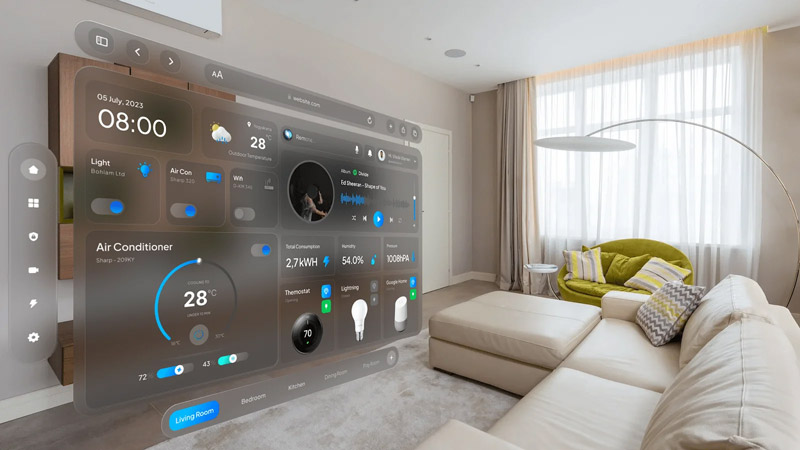
The traditional "infinite scroll" has faced criticism for its tendency to foster addiction and information overload. It is being replaced by "scroll-driven narrative." In this model, the scrolling action is no longer merely about moving the viewport but serves as the engine driving the timeline and narrative logic.
As the user scrolls down, interface elements don't simply translate upward; they undergo complex transformations based on a pre-set narrative script. The background might transition from dawn to dusk as the content deepens, 3D product models may rotate and disassemble to reveal internal structures, and scrolling speed determines the narrative's flow rate.
Utilizing "smart snapping" technology, users can naturally pause at key narrative nodes, preventing information loss from rapid scrolling. For Hong Kong brands, this narrative approach is particularly suitable for telling brand stories, showcasing product craftsmanship, or presenting company history.
UI Design Trend #5: Pseudo-3D and 2.5D—Immersive Experiences on Flat Screens
Feature: Using 2.5D and pseudo-3D effects to turn webpages into an "experience journey," not just information carriers.
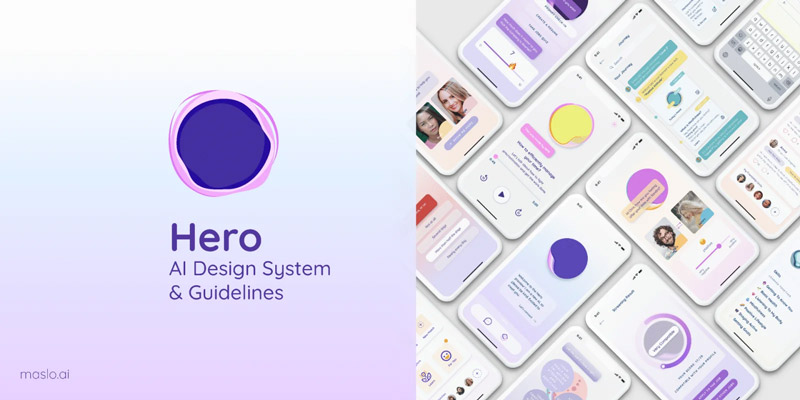
Influenced by spatial computing devices, even on ordinary flat screens like phones and computers, UI has begun pursuing a sense of "spatiality." Hong Kong's UI design in 2026 widely adopts "pseudo-3D" and "2.5D" techniques. By leveraging the device's gyroscope and cursor position, flat cards and images produce parallax movement.
3D cards change the direction of their shadow projection based on cursor movement, offering a near-real sense of object presence. This spatialized design breaks the traditional grid layout of webpages, allowing elements to stack and interweave along the Z-axis.
This trend is particularly important for Hong Kong's e-commerce websites. By showcasing products in 3D, users can view item details from various angles, significantly boosting purchase confidence. For service-oriented websites, spatialized interfaces can create unique brand atmospheres and immersive experiences.
UI Design Trend #6: Hyper-Personalized Layouts—Moving Beyond Simple "Recommended For You"
Feature: UI not only recommends content but can also dynamically reorganize based on usage habits and biological rhythms.
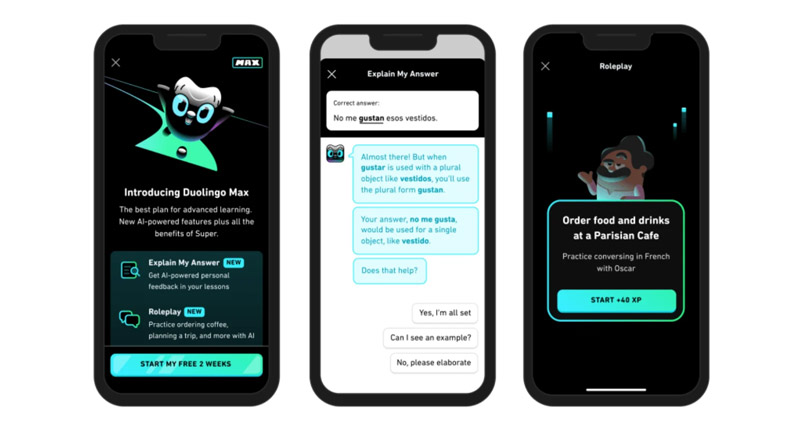
Powered by AI, webpage UI in 2026 finally achieves true hyper-personalization. This goes beyond simple "recommended for you" content suggestions, delving into the level of UI layout and functional logic.
Websites can dynamically reorganize UI based on the user's habits, current context, and biological rhythm. For a financial news website, if the visitor is an analyst, the system prioritizes charting tools and real-time data; if it's a retail investor, it highlights risk warnings and investment advice.
This adaptive layout relies on a highly flexible dynamic design system. UI elements no longer have fixed positions; they are arranged in real-time based on weighting algorithms. This poses a challenge to brand consistency.
Designers must define a robust set of "brand genetic algorithms" to balance "personalization" and "consistency," ensuring that no matter how the UI morphs, users can still instantly recognize it as belonging to that brand.
UI Design Trend #7: Dynamic Typography & Micro-Interaction Storytelling—Vessels for Brand Personality
Feature: Text is no longer static but deforms, changes color, or even shatters and reassembles with interaction.
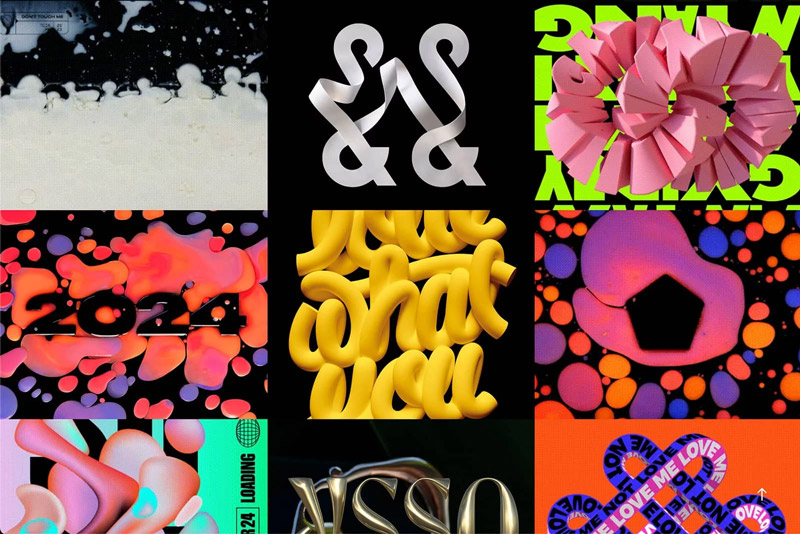
In the 2026 design landscape, text has completely shed its static symbolic constraints, evolving into a vibrant visual element. Dynamic typography has become a dominant visual trend of the year. It transforms headlines from rigid typefaces into visual elements that can deform, change color, stretch, or even shatter and reassemble based on user mouse hovers, page scrolling, or voice input.
In an era of information overload, static text is perceived as having low conversion rates and being dull. Consequently, more designers are utilizing variable font technology, allowing for seamless adjustment of font weight, width, slant, and serif shape, tightly binding these changes to user interaction behaviors.
Simultaneously, micro-interactions are endowed with unprecedented narrative functions. A simple "like" button no longer just mechanically turns red; it might erupt into a burst of colored particles, bounce elastically like jelly, or even display different levels of elaborate animation based on accumulated likes.
In this year of 2026, where design and technology are tightly interwoven, each trend carries an ethical shadow. With the proliferation of affective computing and deep personalization, how does one find balance between respecting users and innovating experiences? In a diverse international metropolis like Hong Kong, designers must especially consider cultural sensitivity and accessibility, ensuring every webpage embodies a commitment to human dignity.
2026 UI Design Trend Evolution: From Mobile-First to Spatial Intelligence
The UI design paradigms of the past decade—mobile-first, flat design, and static design systems—are now being replaced by a new wave characterized by greater dynamism, intelligence, and immersion.
This signifies that 2026's UI design will no longer focus merely on the aesthetic refinement of interfaces but will delve deep into the underlying logic of interaction!
In particular, the proliferation of spatial computing devices, coupled with users reaching peak awareness of digital addiction, is compelling design to shift from "competing for attention" to "respecting attention." These changes are being integrated into design trends in various forms.
What UI design trends are worth watching in 2026?
UI Design Trend #1: Generative Interfaces—AI-Driven Instant Design
Feature: Interfaces are no longer fixed but are generated in real-time by AI based on user intent.
Web interfaces in 2026 are undergoing the most profound transformation since 1976. Traditional UI design workflows rely on designers pre-defining every screen, every state, and every navigation logic. Generative UI completely shatters this model.
Under the concept of generative UI, a webpage is no longer a pre-drawn, static image. Instead, it is dynamically recomposed by AI within milliseconds, based on the user's real-time intent, contextual environment, and device state. This means two different users visiting the same website may see entirely different interface layouts.
From the perspective of Hong Kong's UI design practice, this shift signifies that the design object changes from "pages" to "component relationships" and "generation rules." User actions (such as voice commands, vague search terms, or click behavior) are parsed by on-device small models into specific, structured intents. The AI system then retrieves atomic components from the design system library that comply with brand guidelines and arranges them in real-time based on the current screen size, user preferences, and task priority, generating a temporary, disposable UI.
UI Design Trend #2: Liquid Glass Aesthetics—A New Language of Digital Materiality
Feature: Dynamic effects like motion blur, specular highlights, and light-shadow interplay—characteristic of liquid glass—will become one of the mainstream aesthetics of 2026.
If the flat design of the 2010s was an adaptation to low-resolution screens and performance-constrained mobile processors, then the "liquid glass" aesthetics of 2026 are a natural product of hardware performance surplus and leaps in screen display technology.
This trend was ignited by Apple's operating system updates announced at WWDC 2025 and rapidly spread throughout the digital design field. "Liquid glass" is not a simple return to skeuomorphism but a highly dynamic digital material with physical properties.
When a user scrolls a list, the underlying content not only blurs but also produces trailing effects similar to fluid flowing over a glass surface. The edges of buttons and cards display flowing highlights based on the tilt angle detected by the device's gyroscope.
Through precise optical blurring and depth layering, designers can clearly present foreground operation areas without obstructing background content. This aesthetic provides a means of differentiation that was largely lost during the flat design era.
UI Design Trend #3: Multimodal Interaction—Beyond Clicking and Swiping
Feature: 2026's UI design trends are no longer confined to mouse and touch; voice, gesture, eye-tracking, and even emotion recognition become standard input methods.
Interaction design in 2026 officially bids farewell to the era where "clicking" and "swiping" were the absolute core, entering a new phase of multimodal coexistence. With the commoditization of sensor technology and qualitative leaps in AI semantic understanding, voice, gesture, eye-tracking, and even facial micro-expressions have become standard, first-class input methods.
The hallmark of this shift is the "fluidity of input methods." Users no longer need to explicitly switch modes. While viewing a website, a user can type, use voice to supplement a query, and use eye gaze on a corner of the screen to summon reference materials simultaneously. The system can seamlessly integrate these three inputs to understand the user's comprehensive intent.
For example, in the automotive sector, multimodal interaction has become standard for some Hong Kong automaker websites. These designs transform the entire webpage into an interactive area, combining augmented reality (AR) to present product information directly within the user's field of view.
UI Design Trend #4: Spatialized Storytelling—Breaking Planar Limitations
Feature: Scrolling no longer just moves the viewport; it drives narrative logic.
The traditional "infinite scroll" has faced criticism for its tendency to foster addiction and information overload. It is being replaced by "scroll-driven narrative." In this model, the scrolling action is no longer merely about moving the viewport but serves as the engine driving the timeline and narrative logic.
As the user scrolls down, interface elements don't simply translate upward; they undergo complex transformations based on a pre-set narrative script. The background might transition from dawn to dusk as the content deepens, 3D product models may rotate and disassemble to reveal internal structures, and scrolling speed determines the narrative's flow rate.
Utilizing "smart snapping" technology, users can naturally pause at key narrative nodes, preventing information loss from rapid scrolling. For Hong Kong brands, this narrative approach is particularly suitable for telling brand stories, showcasing product craftsmanship, or presenting company history.
UI Design Trend #5: Pseudo-3D and 2.5D—Immersive Experiences on Flat Screens
Feature: Using 2.5D and pseudo-3D effects to turn webpages into an "experience journey," not just information carriers.
Influenced by spatial computing devices, even on ordinary flat screens like phones and computers, UI has begun pursuing a sense of "spatiality." Hong Kong's UI design in 2026 widely adopts "pseudo-3D" and "2.5D" techniques. By leveraging the device's gyroscope and cursor position, flat cards and images produce parallax movement.
3D cards change the direction of their shadow projection based on cursor movement, offering a near-real sense of object presence. This spatialized design breaks the traditional grid layout of webpages, allowing elements to stack and interweave along the Z-axis.
This trend is particularly important for Hong Kong's e-commerce websites. By showcasing products in 3D, users can view item details from various angles, significantly boosting purchase confidence. For service-oriented websites, spatialized interfaces can create unique brand atmospheres and immersive experiences.
UI Design Trend #6: Hyper-Personalized Layouts—Moving Beyond Simple "Recommended For You"
Feature: UI not only recommends content but can also dynamically reorganize based on usage habits and biological rhythms.
Powered by AI, webpage UI in 2026 finally achieves true hyper-personalization. This goes beyond simple "recommended for you" content suggestions, delving into the level of UI layout and functional logic.
Websites can dynamically reorganize UI based on the user's habits, current context, and biological rhythm. For a financial news website, if the visitor is an analyst, the system prioritizes charting tools and real-time data; if it's a retail investor, it highlights risk warnings and investment advice.
This adaptive layout relies on a highly flexible dynamic design system. UI elements no longer have fixed positions; they are arranged in real-time based on weighting algorithms. This poses a challenge to brand consistency.
Designers must define a robust set of "brand genetic algorithms" to balance "personalization" and "consistency," ensuring that no matter how the UI morphs, users can still instantly recognize it as belonging to that brand.
UI Design Trend #7: Dynamic Typography & Micro-Interaction Storytelling—Vessels for Brand Personality
Feature: Text is no longer static but deforms, changes color, or even shatters and reassembles with interaction.
In the 2026 design landscape, text has completely shed its static symbolic constraints, evolving into a vibrant visual element. Dynamic typography has become a dominant visual trend of the year. It transforms headlines from rigid typefaces into visual elements that can deform, change color, stretch, or even shatter and reassemble based on user mouse hovers, page scrolling, or voice input.
In an era of information overload, static text is perceived as having low conversion rates and being dull. Consequently, more designers are utilizing variable font technology, allowing for seamless adjustment of font weight, width, slant, and serif shape, tightly binding these changes to user interaction behaviors.
Simultaneously, micro-interactions are endowed with unprecedented narrative functions. A simple "like" button no longer just mechanically turns red; it might erupt into a burst of colored particles, bounce elastically like jelly, or even display different levels of elaborate animation based on accumulated likes.
In this year of 2026, where design and technology are tightly interwoven, each trend carries an ethical shadow. With the proliferation of affective computing and deep personalization, how does one find balance between respecting users and innovating experiences? In a diverse international metropolis like Hong Kong, designers must especially consider cultural sensitivity and accessibility, ensuring every webpage embodies a commitment to human dignity.
MORE BLOG
-
Say goodbye to cumbersome website development processes! How to Build Websites Using Gemini 3
2025/12/16 With the rapid advancement of AI technology, numerous powerful AI tools have emerged online, bringing unprecedented transformation to website development. Today, Arachne Group Limited highlights a powerful tool for everyone – Gemini 3. -
What Functions Does an Online Store Design Typically Include? Five Essential Core Functions, Each Indispensable!
2025/12/10 The following will guide you step-by-step from fundamental concepts to essential practical functions, and then to payment gateway options and advanced integrations, to master everything you need to know about building a successful online store. -
Do Individual Studios Need a Website? Sharing Five Key Areas of Web Development and Online Promotion Focus
2025/12/03 This requires entrepreneurs to consider creating a professional website and developing an effective online promotion strategy to ensure their individual studio stands out in a competitive market.

