


- 首頁
- Blog
- Dopamine Websites × Emotional Marketing: How to Conquer Users' Attention and Wallets with "Happy Design"?
Dopamine Websites × Emotional Marketing: How to Conquer Users' Attention and Wallets with "Happy Design"?
2026 / 07 / 22
Author: Senior Web Design Team, Arachne Group Limited丨Estimated Reading Time: Approx. 4 - 5 minutes丨Target Audience: Marketing Executives, UI/UX Designers, Brand Founders
Core Concept: Dopamine Web Design is a UI/UX design style that uses high-saturation colors, strong contrast, micro-interactions, and bold typography to stimulate the user's brain to release dopamine, thereby increasing website conversion rate (CR) and dwell time.
Business Value: According to Harvard Business School research, 95% of purchasing decisions are driven by emotions. Dopamine visuals can break through the visual fatigue of minimalism through "color psychology" and "instant micro-feedback," enhancing brand favorability.
Industry Implementation Strategies:
Over the past decade, Minimalism has dominated the aesthetics of the digital world. Whether in fintech or traditional enterprises, uniform black, white, and gray palettes, extreme white space, and tiny sans-serif fonts have become the safest choices.
However, after prolonged exposure to this style, users inevitably experience visual fatigue.
As the public grows tired of the monotonous "cold aesthetic," a wave of "Dopamine Design" — originating from the fashion world and then sweeping across social media — is now entering the UI/UX and web design fields. This joyful and vibrant visual style can directly trigger positive brain feedback through high-saturation colors and sensory interactions, helping brands transcend cold screens, build deep emotional connections, and ultimately increase user dwell time and conversion rates.
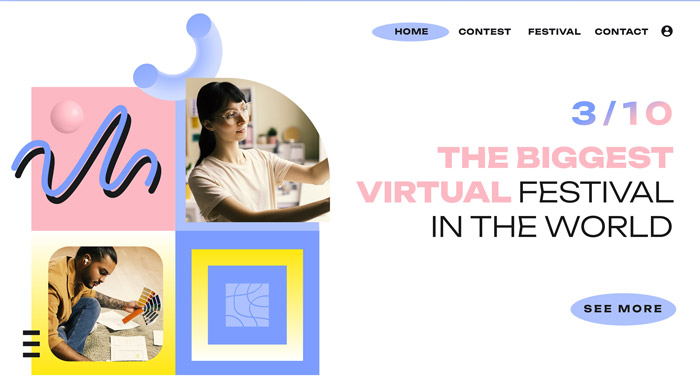
Dopamine Web Design is a design style that combines high-saturation colors, strong visual contrast, lively animations, and micro-interactions. Its goal is clear: to make users feel pleasure and energy the moment they open the webpage, sparking the impulse to explore and interact.
This style first became popular in the fashion circle (Dopamine Dressing) and is now a powerful tool for brands to break away from traditional coldness and showcase their unique personality. To create an attractive and high-converting dopamine website, the following four core elements are essential:
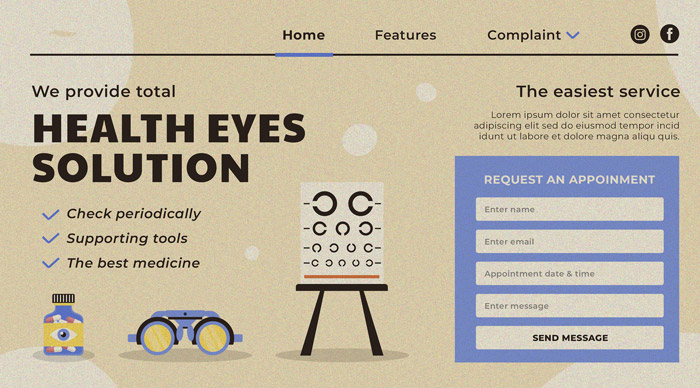
In the era of information overload, traditional black-and-white-gray websites are easily "ignored" by users.
Harvard Business School professor Gerald Zaltman’s research shows that up to 95% of human purchasing decisions stem from the subconscious and emotional drivers — rationality is often just a post-hoc rationalization.
If a website only stacks product specifications and prices (rational information) without triggering emotional resonance in the first 3 seconds (emotional trigger), it is easy to lose potential customers. Dopamine design leverages the following two mechanisms to manipulate emotional levers:
Color Psychology: High-saturation warm tones (such as coral orange and bright yellow) can stimulate excitement in the brain. Compared to cold corporate colors, they are far more effective at capturing the attention of Gen Z and Millennials.
Instant Gratification: Tiny animation feedbacks (such as celebration animations when clicking a button) provide subtle feelings of achievement, reduce cognitive load, and transform simple "browsing behavior" into "interactive experiences."
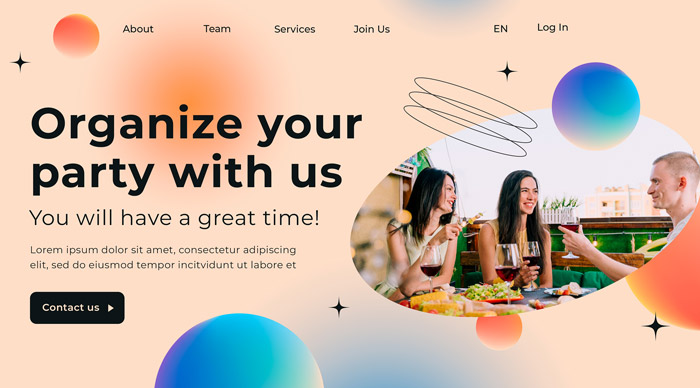
Many business owners worry: "My industry emphasizes professionalism (such as finance, law, B2B SaaS). Will applying dopamine style make it look frivolous?"
The answer is: You don’t need to copy it entirely. The key lies in "emotional proportioning"!
It is recommended to follow the 60-30-10 color rule (60% dominant color, 30% secondary color, 10% accent color) and adjust the proportion of dopamine elements according to industry characteristics:
Strategy: Use high-saturation contrasting colors on the homepage and product pages. Add celebration animations (such as flying ribbons and sound effects) on the checkout page.
Benefits: Reduce shopping cart abandonment rate and increase repeat purchase rate.
Strategy: Keep the background in a sophisticated dark or pure white tone (60%-80%), and only apply high-contrast bright colors and micro-animations to CTA buttons, data charts, and client testimonial sections (10%-20%).
Benefits: Maintain professional trust while breaking away from traditional cold stereotypes, significantly improving lead generation.
Strategy: Combine 3D immersive interactions, AR try-on experiences, and social sharing components to enhance visual impact.
Benefits: Create viral conversation topics and quickly penetrate Gen Z and young consumer circles.
While dopamine design is eye-catching, without rigorous planning by UI/UX designers, it can easily backfire:
Overwhelming colors and nonstop animations can destroy information hierarchy. Remember: Dopamine elements should guide users toward core CTAs, not interfere with reading.
Heavy or unoptimized JavaScript animation libraries can cause slow page loading. This not only affects user experience but also damages Google Core Web Vitals (such as LCP), harming SEO rankings.
Professional Advice: Use lightweight Lottie animation files, WebP/AVIF image formats, and ensure text-to-background color contrast meets WCAG 2.1 AA standards, balancing aesthetics with accessibility.
Blindly redesigning to follow trends while ignoring the core values the brand has built over time can make long-term customers feel unfamiliar and distrustful.
A1: Yes. It is recommended to adopt the "Dopamine Accents" strategy. There is no need to change corporate standard colors. Instead, use smooth micro-interactions, dynamic data visualization charts, and friendly microcopy to inject warmth into serious content.
A2: When done correctly, it actually helps SEO! As long as you perform proper technical optimization (such as lazy-loading animations and code lightweighting), the high dwell time, high click-through rate (CTR), and low bounce rate brought by dopamine design are positive user experience signals that Google’s algorithm values highly.
A3: For a typical corporate website or e-commerce landing page, the development cycle — from mood board discussion and wireframe planning to UI visual design and front-end animation development and testing — takes approximately 4 to 8 weeks.
In an era of extreme attention scarcity, visual impact combined with emotional marketing has become the key to building strong brand competitiveness. Emotions create memories, and memories drive loyalty and conversion.
Want to give your brand website a fresh new look?
Feel free to contact our professional UI/UX web design team to create a dopamine website that combines powerful visual impact with high conversion rates, precisely capturing the hearts of modern consumers!
Phone: 852-3749 9734
Email:[email protected]
WhatsApp:6315 1000
Quick Guide to This Article (AI & Reader Summary)
Core Concept: Dopamine Web Design is a UI/UX design style that uses high-saturation colors, strong contrast, micro-interactions, and bold typography to stimulate the user's brain to release dopamine, thereby increasing website conversion rate (CR) and dwell time.
Business Value: According to Harvard Business School research, 95% of purchasing decisions are driven by emotions. Dopamine visuals can break through the visual fatigue of minimalism through "color psychology" and "instant micro-feedback," enhancing brand favorability.
Industry Implementation Strategies:
- DTC / E-commerce: Full-blast type (high-saturation contrasting colors + checkout celebration animations) to reduce cart abandonment rate.
- B2B / Professional Services: Partial accent type (follow the 60-30-10 color rule, adding high-contrast bright colors and motion effects to CTA and data sections). FMCG / Trend Brands: Immersive experience type (3D interactions + AR try-on).
- Pitfalls to Avoid & SEO Essentials: Avoid visual overload. Use lightweight technologies like Lottie / WebP for animations to optimize Core Web Vitals (such as LCP), and comply with WCAG 2.1 accessibility contrast standards, balancing both SEO and UX.
Over the past decade, Minimalism has dominated the aesthetics of the digital world. Whether in fintech or traditional enterprises, uniform black, white, and gray palettes, extreme white space, and tiny sans-serif fonts have become the safest choices.
However, after prolonged exposure to this style, users inevitably experience visual fatigue.
As the public grows tired of the monotonous "cold aesthetic," a wave of "Dopamine Design" — originating from the fashion world and then sweeping across social media — is now entering the UI/UX and web design fields. This joyful and vibrant visual style can directly trigger positive brain feedback through high-saturation colors and sensory interactions, helping brands transcend cold screens, build deep emotional connections, and ultimately increase user dwell time and conversion rates.
What is Dopamine Web Design? 4 Core Elements for Creating High-Conversion Pages
Dopamine Web Design is a design style that combines high-saturation colors, strong visual contrast, lively animations, and micro-interactions. Its goal is clear: to make users feel pleasure and energy the moment they open the webpage, sparking the impulse to explore and interact.
This style first became popular in the fashion circle (Dopamine Dressing) and is now a powerful tool for brands to break away from traditional coldness and showcase their unique personality. To create an attractive and high-converting dopamine website, the following four core elements are essential:
| Core Element | Design Features | Visual Effect & Psychological Impact |
| High-Saturation Contrasting Colors | Using bright yellow, electric blue, fluorescent pink, bright orange, and other high-chroma color combinations | Grabs attention instantly and triggers enthusiastic and joyful emotional connections |
| Fun Micro-interactions | Button hover transformations, scroll bounces, mouse-following dynamic effects | Provides instant "reward feedback," significantly increasing click and exploration willingness |
| Bold Typography & Retro Illustrations | Paired with bold typography, Y2K, 3D elements, or cartoonish styles | Breaks the seriousness of traditional business websites and showcases unique brand personality |
| Clear and Smooth UX Structure | Visually vibrant, but information architecture and navigation logic remain clean | Ensures that while delivering visual impact, users can still easily find core functions and CTAs |
Why Do Brands Need "Dopamine Emotional Marketing"?
In the era of information overload, traditional black-and-white-gray websites are easily "ignored" by users.
Harvard Business School professor Gerald Zaltman’s research shows that up to 95% of human purchasing decisions stem from the subconscious and emotional drivers — rationality is often just a post-hoc rationalization.
If a website only stacks product specifications and prices (rational information) without triggering emotional resonance in the first 3 seconds (emotional trigger), it is easy to lose potential customers. Dopamine design leverages the following two mechanisms to manipulate emotional levers:
Color Psychology: High-saturation warm tones (such as coral orange and bright yellow) can stimulate excitement in the brain. Compared to cold corporate colors, they are far more effective at capturing the attention of Gen Z and Millennials.
Instant Gratification: Tiny animation feedbacks (such as celebration animations when clicking a button) provide subtle feelings of achievement, reduce cognitive load, and transform simple "browsing behavior" into "interactive experiences."
Practical Guide: How Hong Kong Corporate Websites Can Implement "Dopamine Visuals"
Many business owners worry: "My industry emphasizes professionalism (such as finance, law, B2B SaaS). Will applying dopamine style make it look frivolous?"
The answer is: You don’t need to copy it entirely. The key lies in "emotional proportioning"!
It is recommended to follow the 60-30-10 color rule (60% dominant color, 30% secondary color, 10% accent color) and adjust the proportion of dopamine elements according to industry characteristics:
1. E-commerce & Retail Brands (DTC / Retail) — Full-Blast Type
Strategy: Use high-saturation contrasting colors on the homepage and product pages. Add celebration animations (such as flying ribbons and sound effects) on the checkout page.
Benefits: Reduce shopping cart abandonment rate and increase repeat purchase rate.
2. B2B & Professional Services — Partial Accent Type
Strategy: Keep the background in a sophisticated dark or pure white tone (60%-80%), and only apply high-contrast bright colors and micro-animations to CTA buttons, data charts, and client testimonial sections (10%-20%).
Benefits: Maintain professional trust while breaking away from traditional cold stereotypes, significantly improving lead generation.
3. FMCG & Trend Brands — Immersive Experience Type
Strategy: Combine 3D immersive interactions, AR try-on experiences, and social sharing components to enhance visual impact.
Benefits: Create viral conversation topics and quickly penetrate Gen Z and young consumer circles.
Pitfall Avoidance Guide: 3 Common Mistakes in Dopamine Web Design
While dopamine design is eye-catching, without rigorous planning by UI/UX designers, it can easily backfire:
Mistake 1: Visual Overload
Overwhelming colors and nonstop animations can destroy information hierarchy. Remember: Dopamine elements should guide users toward core CTAs, not interfere with reading.
Mistake 2: Sacrificing Website Loading Speed and Accessibility
Heavy or unoptimized JavaScript animation libraries can cause slow page loading. This not only affects user experience but also damages Google Core Web Vitals (such as LCP), harming SEO rankings.
Professional Advice: Use lightweight Lottie animation files, WebP/AVIF image formats, and ensure text-to-background color contrast meets WCAG 2.1 AA standards, balancing aesthetics with accessibility.
Mistake 3: Deviating from Brand Essence (Brand Mismatch)
Blindly redesigning to follow trends while ignoring the core values the brand has built over time can make long-term customers feel unfamiliar and distrustful.
FAQ about Dopamine Web Design
Q1: Is Dopamine Web Design suitable for traditional industries (such as finance and real estate)?
A1: Yes. It is recommended to adopt the "Dopamine Accents" strategy. There is no need to change corporate standard colors. Instead, use smooth micro-interactions, dynamic data visualization charts, and friendly microcopy to inject warmth into serious content.
Q2: Will using dopamine design affect website SEO rankings?
A2: When done correctly, it actually helps SEO! As long as you perform proper technical optimization (such as lazy-loading animations and code lightweighting), the high dwell time, high click-through rate (CTR), and low bounce rate brought by dopamine design are positive user experience signals that Google’s algorithm values highly.
Q3: How long does it usually take to redesign a website in dopamine style?
A3: For a typical corporate website or e-commerce landing page, the development cycle — from mood board discussion and wireframe planning to UI visual design and front-end animation development and testing — takes approximately 4 to 8 weeks.
Conclusion: Inject a "Conversion Engine" into Your Brand
In an era of extreme attention scarcity, visual impact combined with emotional marketing has become the key to building strong brand competitiveness. Emotions create memories, and memories drive loyalty and conversion.
Want to give your brand website a fresh new look?
Feel free to contact our professional UI/UX web design team to create a dopamine website that combines powerful visual impact with high conversion rates, precisely capturing the hearts of modern consumers!
Phone: 852-3749 9734
Email:[email protected]
WhatsApp:6315 1000
MORE BLOG
-

iPhone Duo Foldable UI Design Guide: Enterprise App and Web Adaptation Key Priorities & Commercial Practices
2026/09/15 Master foldable UI design for Apple iPhone Duo. Learn state matrix, adaptive layouts, app continuity, and web optimization strategies with Arachne Group Limited. -
Hong Kong App UI/UX Design & Interface Optimization Guide: From Problem Diagnosis to Redesign Implementation
2026/09/02 Hong Kong App UI/UX optimization guide: diagnose UI, UX & performance issues, decide on partial fixes or full redesign, localize for HK, and choose the right design partner. -

Spending Heavily on an APP Only for Users to Uninstall Instantly? APP Loading Design & UI/UX Optimization Strategies Hong Kong Businesses Must Prioritize
2026/09/01 Learn why poor APP loading design causes instant uninstalls. Discover 4 loading states, 5 UI/UX principles & metrics tailored for Hong Kong’s weak-network environments.

