


- 首頁
- Blog
- Hotel Website Has Traffic but No Bookings? 5 Key Web Design Strategies to Capture Travelers' Hearts in 10 Seconds
Hotel Website Has Traffic but No Bookings? 5 Key Web Design Strategies to Capture Travelers' Hearts in 10 Seconds
2026 / 07 / 17
【Quick Read: Core Insights】
The core reason hotel websites lose bookings lies in the "10-Second Trust Gap."
To convert traffic into real bookings, your official website must build trust within 10 seconds through contextual visuals, a sticky booking widget, direct booking perks, structured room information, and a lightning-fast mobile experience.
The key to breaking free from high OTA commissions (15%–25%) lies in the dual optimization of your website's UI/UX and SEO!
"When travelers land on your official hotel website, you have only a brief 10 seconds to keep them." This statement is by no means an exaggeration.
According to multiple user behavior studies, within the golden first few seconds of a page loading, users decide whether to continue browsing or leave. In other words, these 10 seconds not only determine whether a hotel can successfully acquire "direct booking guests" but also serve as the critical battleground to prevent travelers from bouncing back to OTAs (Online Travel Agencies, such as Booking.com and Agoda).
When travelers enter your hotel website, their minds perform a rapid-fire "qualification review" that typically lasts no more than 10 seconds:
If a hotel website fails to provide clear, positive, and reassuring answers within 10 seconds, travelers may feel frustrated and choose to leave. This sense of trust is not built on flashy animations or lengthy brand stories, but rather on precise information layout, intuitive UI/UX navigation design, and highly persuasive visual presentation.
Therefore, the core of hotel website conversion rate optimization (CRO) is to deliver a frictionless, seamless experience within this golden 10-second window.
The homepage is a hotel's storefront and the ultimate battleground that determines traveler retention. A high-quality hotel homepage design should focus on the following three golden sections:
1. Above the Fold (First Visual Impression)
When travelers book a hotel, they aren't just buying a bed; they are purchasing a wonderful vacation or a seamless business trip. Therefore, your banner design should excel in three areas:
Avoid generic welcome greetings: Ditch uninspiring, cookie-cutter headlines like "Welcome to Hotel XYZ."
Use situational copywriting: For example, "Fall asleep under the Victoria Harbour skyline and enjoy quiet luxury in the city" or "A 3-minute walk to Shinsaibashi—the perfect balance of business and shopping."
Stunning, high-definition imagery: We recommend using a full-screen, high-definition video banner (Video Hero Banner) or lightweight image carousel to showcase immersive scenes of guests enjoying the amenities (e.g., sunset by an infinity pool, an exquisite in-room breakfast) to help visitors project themselves into the experience within 3 seconds.
2. The Ever-Ready "Booking Widget"
No matter how far down the homepage a user scrolls, the booking widget (including check-in/check-out dates, number of guests, number of rooms, and promo code field) should always remain fixed in the most prominent position, optimized for different devices:
Desktop: Typically presented as a sticky horizontal bar at the top or bottom of the banner.
Mobile: Simplified into a sticky "Book Now" floating action button (Sticky CTA Button) at the bottom of the screen.
3. Clear "Direct Booking Perks"
To minimize booking abandonment, you must give visitors compelling reasons to book directly on your official website rather than through an OTA, right on the homepage, such as:
"Best Rate Guaranteed for direct bookings"
"Free late check-out until 1:00 PM"
"Complimentary welcome drink and artisanal breakfast included with your stay"
When travelers are drawn in by your homepage and click through to your room types page, they have entered the "high purchase intent" phase. At this point, the page's mission is to provide details, establish trust, and eliminate pain points.
1. Structured Information Layout
No one wants to read walls of text before going on vacation. To ensure travelers grasp essential information in the shortest time, use highly icon-based designs for room details:
Basic specs: Size (sq ft/sq m), bed size (e.g., King Size), and maximum occupancy.
Key amenities: Wi-Fi speed, standalone bathtub, capsule coffee machine, high-end hairdryer (emphasizing premium amenities significantly boosts perceived value and pricing power).
The view: Clearly label "city view," "ocean view," or "no window" to prevent negative reviews caused by unmet expectations after check-in.
2. Multi-Angle Realistic Photos & 3D Virtual Tours
Do not just display a single photo of the guest room. Travelers want to see the view looking in from the doorway, bathroom details, and the actual view outside the window.
Integrating 3D virtual tours (VR Tours) can greatly enhance the authenticity of your official website and reduce customer complaints arising from discrepancies between "photos and reality."
3. Dynamic Pricing & Real-Time Inventory Urgency
Incorporating social proof on the room page—such as "Only 2 rooms left!" or "15 people viewed this room type today"—effectively uses urgency to encourage hesitant visitors to complete their bookings faster.
In today's market, over 70% of travelers search for and book their itineraries via smartphones, and many even place orders while commuting. Therefore, a hotel website's mobile design must never be a simple "scaled-down" version of the desktop site. It must follow strict Mobile-First principles:
The Thumb Zone Rule: All key buttons (especially "Call Us" and "Book Now") must be designed within easy reach of a single-handed thumb (the bottom third of the screen).
Minimalist Forms: Minimize the fields required during checkout. Offer localized fast payment options like Apple Pay, Google Pay, Line Pay, or PayMe, allowing travelers to complete reservations using Face ID in under a minute.
Larger Fonts and Spacing: Mobile body text should be at least 16px, and button tap targets should be at least 48px × 48px to prevent the frustration of accidental clicks.
Even the most beautifully designed website is just a mansion in a desert if it loads slowly. Google notes that as page load time goes from 1 second to 3 seconds, the probability of bounce increases by 32%. For hotel websites, the following front-end technical optimizations should be implemented:
Next-Gen Formats: Use WebP or AVIF formats to compress all high-definition room images, significantly reducing file sizes without sacrificing visual quality.
Lazy Loading: Implement lazy loading for off-screen images and map elements (Below the Fold) to optimize Core Web Vitals such as LCP (Largest Contentful Paint).
Content Delivery Network (CDN): Deploy a CDN to ensure overseas travelers (e.g., from Europe, America, or Southeast Asia) enjoy the same ultra-fast loading experience when opening your website.
Do not try to compete head-on with hotel giants for hyper-competitive, broad terms like "Hong Kong Hotels" or "Tokyo Accommodations." Instead, attract highly targeted traffic with high conversion intent through precise keyword mapping:
Brand Keyword Protection: Ensure that when users search for "[Hotel Name] Official Website" or "[Hotel Name] Booking," your official site ranks first on Google to prevent OTAs from intercepting traffic with keyword ads.
"Location + Feature" Long-Tail Keywords: Such as "Tsim Sha Tsui boutique hotel recommendations," "Causeway Bay family-friendly hotels," or "Hong Kong infinity pool staycation."
Business and Travel Intent Content: Write travel guides and exhibition tips for the surrounding area (e.g., "Accommodation Guide Near the Hong Kong Convention and Exhibition Centre") to precisely attract business travelers with clear lodging needs.
Break Free from Commission Dependence: OTA commissions can run as high as 15%–25%. If you can increase your official website's "direct booking rate" by just 20%, the saved commission goes straight into your hotel's net profit.
The Billboard Effect: Many travelers who find your hotel on an OTA will habitually search Google for your official website to get more details or look for lower rates. If your website looks outdated or is difficult to use at that moment, you lose a massive opportunity to secure a "direct sale."
Customer Data Ownership: Booking through your official website allows you to fully capture customer emails, preferences, and other data, which is vital for subsequent member retargeting and loyalty programs.
A: Professional hotel website design typically includes upfront brand positioning, UI/UX design, payment gateway and booking engine integration, SEO setup, and launch testing. A custom redesign generally takes 6 to 12 weeks.
As for the pricing, it varies significantly depending on whether the website uses a "pre-made template" or is a "fully custom design," as well as whether it requires multi-language support or integration with specific PMS (Property Management Systems). We recommend consulting a professional web design agency for a technical evaluation to get an accurate quote.
A: For small-to-medium boutique hotels or B&Bs, we highly recommend integrating a mature third-party booking engine (such as Fastbooking, Siteminder, or Cloudbeds).
Developing an in-house payment system is not only highly expensive to maintain, but it is also difficult to keep pace with international security standards (such as PCI-DSS certification). A professional web design company will help you seamlessly and beautifully "embed" these third-party booking systems into your website's interface so travelers don't feel hesitant about being redirected to an unfamiliar site when paying.
A: Launching the website is just the beginning. To maintain excellent rankings over the long term, you must regularly update your website content (such as latest promotions and surrounding attraction blogs), monitor the health of Google Search Console, ensure there are no broken links (404 errors), and keep mobile loading speeds at an optimal rating.
In a highly competitive hospitality market, an outstanding hotel website design is far more than just a collection of beautiful photos—it is a carefully calculated system of "behavioral science." From the very first second a traveler steps onto your website, the visuals, copywriting, speed, and usability silently guide them toward making a booking decision.
Why Choose Us as Your "Direct Booking Conversion Optimization" Partner?
As a professional digital marketing and web design team deeply rooted in the Hong Kong market, Hong Kong Web Group understands the pain points of hotel operators. We don't just chase aesthetic perfection; we focus on data-driven conversion rate optimization (CRO). To achieve this, we provide:
Robust Technical Expertise: Integration with mainstream booking systems and PMS to synchronize room rates and inventory in real time.
Mobile-First Design: Creating mobile pages that run as smoothly as native apps to minimize bounce rates.
Comprehensive SEO Strategy: From website architecture (Schema markup) to content marketing, keeping your official website naturally positioned ahead of your competitors.
Want to say goodbye to high OTA commissions and reclaim your booking independence?
>> Contact our web design consultants today. We will provide you with a free initial diagnosis of your website's health and conversion rate, and work with you to build your exclusive direct booking growth engine!
Phone: 852-3749 9734
Email: [email protected]
WhatsApp: 6315 1000
The core reason hotel websites lose bookings lies in the "10-Second Trust Gap."
To convert traffic into real bookings, your official website must build trust within 10 seconds through contextual visuals, a sticky booking widget, direct booking perks, structured room information, and a lightning-fast mobile experience.
The key to breaking free from high OTA commissions (15%–25%) lies in the dual optimization of your website's UI/UX and SEO!
Why Does Your Hotel Website Have Traffic but No Bookings? The Culprit: "The 10-Second Trust Gap"
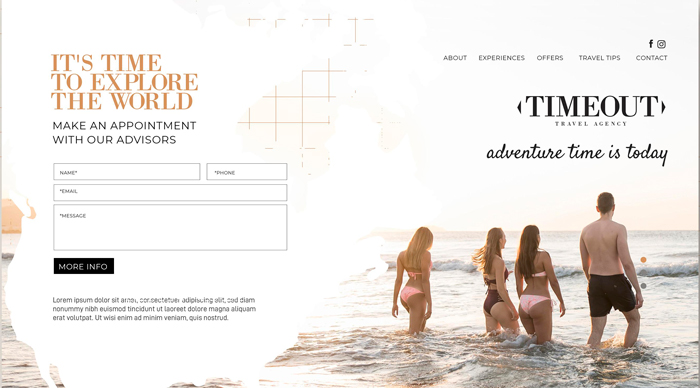
According to multiple user behavior studies, within the golden first few seconds of a page loading, users decide whether to continue browsing or leave. In other words, these 10 seconds not only determine whether a hotel can successfully acquire "direct booking guests" but also serve as the critical battleground to prevent travelers from bouncing back to OTAs (Online Travel Agencies, such as Booking.com and Agoda).
Why is mastering the "10-Second Trust Gap" so crucial?
When travelers enter your hotel website, their minds perform a rapid-fire "qualification review" that typically lasts no more than 10 seconds:
| Time Frame | Traveler Psychology Decoded | Core Website Tasks & Optimization Focus |
| 0 to 3 seconds | Is this where I want to stay? | Visuals & Atmosphere: High-end aesthetic, design style, and first impressions. |
| 3 to 6 seconds | What are the benefits of staying here? | Core Value & Positioning: Location, signature amenities, and exclusive views. |
| 6 to 10 seconds | How much is the room? Are there vacancies? | Call to Action (CTA): Whether the quick booking entry is intuitive. |
If a hotel website fails to provide clear, positive, and reassuring answers within 10 seconds, travelers may feel frustrated and choose to leave. This sense of trust is not built on flashy animations or lengthy brand stories, but rather on precise information layout, intuitive UI/UX navigation design, and highly persuasive visual presentation.
Therefore, the core of hotel website conversion rate optimization (CRO) is to deliver a frictionless, seamless experience within this golden 10-second window.
5 Key Hotel Web Design Strategies: Build Trust and Guide Bookings in 10 Seconds
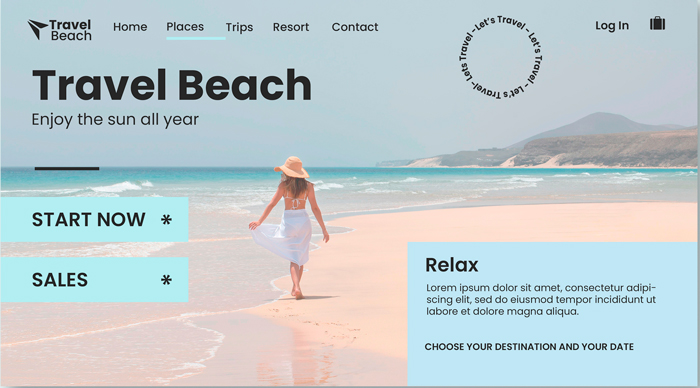
Hotel Homepage Design: Ignite a "Sense of Vacation Ritual" at First Sight
The homepage is a hotel's storefront and the ultimate battleground that determines traveler retention. A high-quality hotel homepage design should focus on the following three golden sections:
1. Above the Fold (First Visual Impression)
When travelers book a hotel, they aren't just buying a bed; they are purchasing a wonderful vacation or a seamless business trip. Therefore, your banner design should excel in three areas:
Avoid generic welcome greetings: Ditch uninspiring, cookie-cutter headlines like "Welcome to Hotel XYZ."
Use situational copywriting: For example, "Fall asleep under the Victoria Harbour skyline and enjoy quiet luxury in the city" or "A 3-minute walk to Shinsaibashi—the perfect balance of business and shopping."
Stunning, high-definition imagery: We recommend using a full-screen, high-definition video banner (Video Hero Banner) or lightweight image carousel to showcase immersive scenes of guests enjoying the amenities (e.g., sunset by an infinity pool, an exquisite in-room breakfast) to help visitors project themselves into the experience within 3 seconds.
2. The Ever-Ready "Booking Widget"
No matter how far down the homepage a user scrolls, the booking widget (including check-in/check-out dates, number of guests, number of rooms, and promo code field) should always remain fixed in the most prominent position, optimized for different devices:
Desktop: Typically presented as a sticky horizontal bar at the top or bottom of the banner.
Mobile: Simplified into a sticky "Book Now" floating action button (Sticky CTA Button) at the bottom of the screen.
3. Clear "Direct Booking Perks"
To minimize booking abandonment, you must give visitors compelling reasons to book directly on your official website rather than through an OTA, right on the homepage, such as:
"Best Rate Guaranteed for direct bookings"
"Free late check-out until 1:00 PM"
"Complimentary welcome drink and artisanal breakfast included with your stay"
Structured Room Type Information: Icon-Based Design to Eliminate Booking Hesitation
When travelers are drawn in by your homepage and click through to your room types page, they have entered the "high purchase intent" phase. At this point, the page's mission is to provide details, establish trust, and eliminate pain points.
1. Structured Information Layout
No one wants to read walls of text before going on vacation. To ensure travelers grasp essential information in the shortest time, use highly icon-based designs for room details:
Basic specs: Size (sq ft/sq m), bed size (e.g., King Size), and maximum occupancy.
Key amenities: Wi-Fi speed, standalone bathtub, capsule coffee machine, high-end hairdryer (emphasizing premium amenities significantly boosts perceived value and pricing power).
The view: Clearly label "city view," "ocean view," or "no window" to prevent negative reviews caused by unmet expectations after check-in.
2. Multi-Angle Realistic Photos & 3D Virtual Tours
Do not just display a single photo of the guest room. Travelers want to see the view looking in from the doorway, bathroom details, and the actual view outside the window.
Integrating 3D virtual tours (VR Tours) can greatly enhance the authenticity of your official website and reduce customer complaints arising from discrepancies between "photos and reality."
3. Dynamic Pricing & Real-Time Inventory Urgency
Incorporating social proof on the room page—such as "Only 2 rooms left!" or "15 people viewed this room type today"—effectively uses urgency to encourage hesitant visitors to complete their bookings faster.
Three: Mobile-First—Seamless Booking Experience at the Fingertips
In today's market, over 70% of travelers search for and book their itineraries via smartphones, and many even place orders while commuting. Therefore, a hotel website's mobile design must never be a simple "scaled-down" version of the desktop site. It must follow strict Mobile-First principles:
The Thumb Zone Rule: All key buttons (especially "Call Us" and "Book Now") must be designed within easy reach of a single-handed thumb (the bottom third of the screen).
Minimalist Forms: Minimize the fields required during checkout. Offer localized fast payment options like Apple Pay, Google Pay, Line Pay, or PayMe, allowing travelers to complete reservations using Face ID in under a minute.
Larger Fonts and Spacing: Mobile body text should be at least 16px, and button tap targets should be at least 48px × 48px to prevent the frustration of accidental clicks.
Technical Performance Optimization: Speed is the Lifeline of Conversion Rates
Even the most beautifully designed website is just a mansion in a desert if it loads slowly. Google notes that as page load time goes from 1 second to 3 seconds, the probability of bounce increases by 32%. For hotel websites, the following front-end technical optimizations should be implemented:
Next-Gen Formats: Use WebP or AVIF formats to compress all high-definition room images, significantly reducing file sizes without sacrificing visual quality.
Lazy Loading: Implement lazy loading for off-screen images and map elements (Below the Fold) to optimize Core Web Vitals such as LCP (Largest Contentful Paint).
Content Delivery Network (CDN): Deploy a CDN to ensure overseas travelers (e.g., from Europe, America, or Southeast Asia) enjoy the same ultra-fast loading experience when opening your website.
Hotel Website SEO Strategy: Capture the Blue Ocean of Precise Long-Tail Keywords
Do not try to compete head-on with hotel giants for hyper-competitive, broad terms like "Hong Kong Hotels" or "Tokyo Accommodations." Instead, attract highly targeted traffic with high conversion intent through precise keyword mapping:
Brand Keyword Protection: Ensure that when users search for "[Hotel Name] Official Website" or "[Hotel Name] Booking," your official site ranks first on Google to prevent OTAs from intercepting traffic with keyword ads.
"Location + Feature" Long-Tail Keywords: Such as "Tsim Sha Tsui boutique hotel recommendations," "Causeway Bay family-friendly hotels," or "Hong Kong infinity pool staycation."
Business and Travel Intent Content: Write travel guides and exhibition tips for the surrounding area (e.g., "Accommodation Guide Near the Hong Kong Convention and Exhibition Centre") to precisely attract business travelers with clear lodging needs.
Frequently Asked Questions (FAQ) About Hotel Web Design
Q1: Our hotel is already listed on Booking.com and Agoda. Why should we spend budget on a "hotel website redesign"?
A: This is a common blind spot for many owners. Having a high-quality official website delivers three irreplaceable core values:Break Free from Commission Dependence: OTA commissions can run as high as 15%–25%. If you can increase your official website's "direct booking rate" by just 20%, the saved commission goes straight into your hotel's net profit.
The Billboard Effect: Many travelers who find your hotel on an OTA will habitually search Google for your official website to get more details or look for lower rates. If your website looks outdated or is difficult to use at that moment, you lose a massive opportunity to secure a "direct sale."
Customer Data Ownership: Booking through your official website allows you to fully capture customer emails, preferences, and other data, which is vital for subsequent member retargeting and loyalty programs.
Q2: How long does a standard "hotel web design" project take, and what is the typical budget?
A: Professional hotel website design typically includes upfront brand positioning, UI/UX design, payment gateway and booking engine integration, SEO setup, and launch testing. A custom redesign generally takes 6 to 12 weeks.
As for the pricing, it varies significantly depending on whether the website uses a "pre-made template" or is a "fully custom design," as well as whether it requires multi-language support or integration with specific PMS (Property Management Systems). We recommend consulting a professional web design agency for a technical evaluation to get an accurate quote.
Q3: To improve booking rates, should our website build its own "booking payment system" or integrate a third-party booking engine?
A: For small-to-medium boutique hotels or B&Bs, we highly recommend integrating a mature third-party booking engine (such as Fastbooking, Siteminder, or Cloudbeds).
Developing an in-house payment system is not only highly expensive to maintain, but it is also difficult to keep pace with international security standards (such as PCI-DSS certification). A professional web design company will help you seamlessly and beautifully "embed" these third-party booking systems into your website's interface so travelers don't feel hesitant about being redirected to an unfamiliar site when paying.
Q4: How do we maintain our Google search ranking after the hotel website is designed and launched?
A: Launching the website is just the beginning. To maintain excellent rankings over the long term, you must regularly update your website content (such as latest promotions and surrounding attraction blogs), monitor the health of Google Search Console, ensure there are no broken links (404 errors), and keep mobile loading speeds at an optimal rating.
Conclusion: Turn Your Official Website into a 24/7 "Star Salesperson"
In a highly competitive hospitality market, an outstanding hotel website design is far more than just a collection of beautiful photos—it is a carefully calculated system of "behavioral science." From the very first second a traveler steps onto your website, the visuals, copywriting, speed, and usability silently guide them toward making a booking decision.
Why Choose Us as Your "Direct Booking Conversion Optimization" Partner?
As a professional digital marketing and web design team deeply rooted in the Hong Kong market, Hong Kong Web Group understands the pain points of hotel operators. We don't just chase aesthetic perfection; we focus on data-driven conversion rate optimization (CRO). To achieve this, we provide:
Robust Technical Expertise: Integration with mainstream booking systems and PMS to synchronize room rates and inventory in real time.
Mobile-First Design: Creating mobile pages that run as smoothly as native apps to minimize bounce rates.
Comprehensive SEO Strategy: From website architecture (Schema markup) to content marketing, keeping your official website naturally positioned ahead of your competitors.
Want to say goodbye to high OTA commissions and reclaim your booking independence?
>> Contact our web design consultants today. We will provide you with a free initial diagnosis of your website's health and conversion rate, and work with you to build your exclusive direct booking growth engine!
Phone: 852-3749 9734
Email: [email protected]
WhatsApp: 6315 1000
MORE BLOG
-
Unsatisfied with AI Website Drafts? 5 Steps to Turn Initial Drafts into Effective Business Websites
2026/10/13 Stuck with a generic AI website? Follow our 5-step guide to turn AI initial drafts into effective, user-friendly business websites tailored to your brand. -

What to Do If Your WordPress Site Is Slow? Speed Diagnosis, Cause Identification, and Acceleration Steps
2026/10/09 Is your WordPress site running slow? Learn how to diagnose loading issues, fix Core Web Vitals, and optimize your website speed step-by-step to boost SEO. -
Hong Kong Web Design Guide: How to Build a High-Converting WordPress Site from Scratch
2026/09/30 Complete Hong Kong WordPress guide: domain, hosting, SEO, & pricing for HK SMEs. Learn DIY vs agency web design to build high-converting websites.

