


- 首頁
- Blog
- 【Your 24-Hour Star Salesperson】Why Websites Have Become the Core Lead Generation Tool for Trading Companies?
【Your 24-Hour Star Salesperson】Why Websites Have Become the Core Lead Generation Tool for Trading Companies?
2026 / 06 / 12
In the past, the primary way for Hong Kong trading companies to acquire clients was nothing more than traveling around major European and American trade shows with suitcases, or paying exorbitant membership and advertising fees on B2B platforms like Alibaba and Global Sources every year. That was a golden age when simply "displaying products in the right place" could bring in a continuous stream of inquiries.
However, with the global supply chain becoming increasingly saturated and digital transformation accelerating, traditional customer acquisition models are facing tremendous challenges. Today, overseas buyers no longer rely solely on trade shows to try their luck, nor do they blindly trust suppliers who are stuck in price wars on third-party platforms. Instead, after receiving a quotation or a business card, they often go directly to Google to search for the company name and carefully scrutinize its official website.
If your enterprise does not have an official website at this moment, or if your website is still stuck in a broken, outdated state from a decade ago that misaligns even on mobile screens, it is equivalent to handing over orders to your competitors. In today's B2B trade environment, a high-converting website is no longer an optional "digital business card," but a core customer acquisition channel that determines whether an enterprise can break through growth bottlenecks and obtain high-quality inquiries.
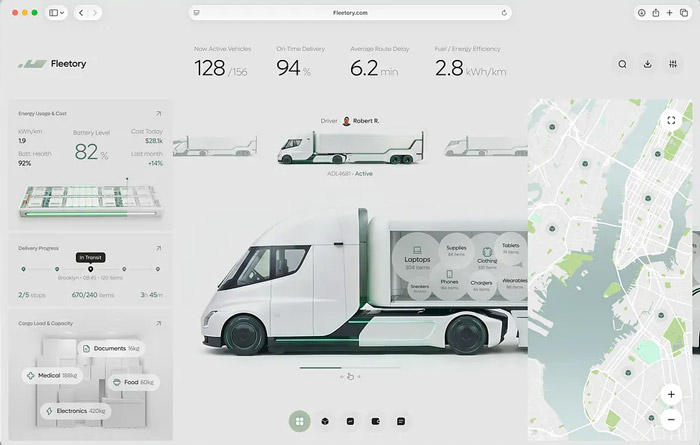
Many bosses of trading companies often have this doubt: "Our B2B wholesale business relies on networks and business reputation. Why do trading companies need a website?"
In fact, the answer is very simple:
Reason 1: A Website is the Enterprise's Global Showroom Window
Physical trade shows usually last for only three to five days, but competition in the digital market spans across all time zones. A high-quality foreign trade website development can break through geographical and time constraints, showcasing your production capabilities, product lines, and core advantages to potential buyers worldwide 24/7. Meanwhile, by establishing a multilingual system (such as English, Japanese, German, Spanish, etc.), trading companies can precisely reach localized target markets, allowing overseas purchasing managers to evaluate your supply chain capabilities anytime and anywhere during their office hours.
Reason 2: A Website is the Key to Building Trust
When looking for new suppliers, many overseas buyers will definitely conduct background checks on potential partners to minimize transaction risks. If they search for your company name on Google only to find nothing at all, or see an outdated website without a secure connection, would they feel secure handing over millions of dollars in orders to you? Evidently, a professional, transparent website with security certifications can instantly endorse your business and establish a strong international corporate image.
Reason 3: Reducing Over-Dependence on Third-Party Platforms
Undeniably, B2B platforms like Alibaba and Global Sources once brought a lot of traffic to many trading companies. However, these platforms have now degenerated into a brutal "price red ocean." Furthermore, platform rules change every year. Businesses not only have to pay high annual fees but also must constantly bid on advertisements to compete for exposure, severely compressing profit margins.
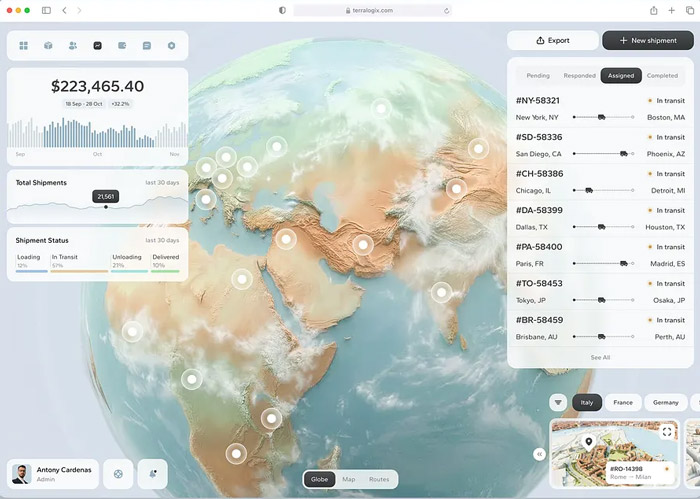
Many trading companies often complain: "We spent so much money making a website, but we haven't received many business inquiries. Why bother building one?"
This is actually because the website design was only superficial, ignoring "Conversion Rate Optimization (CRO)." A website that can truly generate revenue for an enterprise must have a browsing flow and content design that perfectly align with the psychology and decision-making logic of B2B procurement managers.
Here are the six design keys to increasing inquiries that we have summarized while helping numerous foreign trade enterprises plan their web pages:
B2B purchasing managers usually visit a website with very clear goals: either looking for products with specific specifications or evaluating whether the enterprise possesses OEM/ODM customization capabilities. Therefore, the website menu and product classifications must fully align with industry logic. Avoid using confusing "creative names"; instead, use standard industry keywords for categorization. Additionally, the website needs to provide powerful filtering functions (such as filtering by material, application scenario, certification standards, etc.) to ensure buyers can precisely locate target products within "3 seconds."
Ordinary e-commerce websites only need to display beautiful product photos, but product pages designed for B2B websites need to provide rich technical parameters. A product page that impresses procurement managers should include:
▪ Multi-angle HD product images and close-ups (it is even better if paired with 3D product displays or factory operation videos).
▪ Detailed specification tables (Dimensions, Material, Technical Specifications).
▪ Clear application scenarios to tell buyers which industries this product is suitable for.
Never let buyers leave silently after viewing a product just because they don't know what to do next. In prominent positions on the product page (such as directly below the title, or on top and sidebars fixed during page scrolling), contrast-heavy CTA buttons with precise copy must be designed. Instead of using a vague and passive "Contact Us," it is better to directly use "Request a Quote," "Get Samples," or "Consult Custom Solutions." These explicit instructions can more effectively drive buyers to take action and represent the fastest path to increasing inquiry volumes in the short term.
In the virtual online world, how do you prove that you are a powerful factory or an experienced trader? The answer is: you need to visualize "trust."
Authoritative Certifications and Certificates Display: Place international certification logos such as ISO, CE, FDA, and RoHS prominently on the website homepage and footer to establish a compliant, professional image from the very first second.
Factory Scenes and R&D Capabilities: Display high-definition photos of actual factory premises, modern production lines, or R&D laboratories to intuitively present the enterprise's production scale and strict quality control processes.
Global Client Testimonials and Track Records: Use a world map to visually mark your export footprints and list the logos of well-known cooperative brands, using existing success stories to endorse the company's strength.
Buyers in different regions have different communication habits. For instance, Asian buyers may be used to WhatsApp or WeChat, while European and American buyers prefer Email forms or LinkedIn. A qualified trade website should seamlessly integrate these tools, such as adding a "WhatsApp 1-on-1 Instant Chat" button in the bottom right corner of the website, while ensuring embedded Inquiry Forms remain streamlined. Furthermore, the interface needs to avoid overly tedious required fields to prevent significantly reducing a buyer's willingness to fill them out.
Many people mistakenly assume that B2B buyers only use computers to view official websites. According to Google statistics, over 60% of B2B buyers use smartphones for preliminary supplier screening during trade shows or business trips. If your website lacks Responsive Web Design (RWD)—resulting in tiny fonts, distorted tables, or hard-to-click buttons on mobile phones—buyers will close the window without hesitation. More ruthlessly, the mobile browsing experience directly affects your website's Google SEO ranking. This means if the mobile version is poorly optimized, your website won't even have a chance to appear on the first page of Google.
When preparing for a trading company's web design, business owners often face a technical dilemma: "Should we build it using the open-source WordPress system, or find a web design company for fully customized programming development?"
There is no absolute superiority between the two; the key lies in the enterprise's current development stage and budget allocation:
How should foreign trade enterprises take the first step? It is recommended to choose the WordPress system as the starting tool for your foreign trade official website in the early stages of setup. This allows you to go online quickly with high cost-effectiveness and seize market opportunities. When the company grows larger and develops more complex system integration needs, you can then consider high-end custom restructuring. Doing so controls early testing costs while maintaining future expansion flexibility.
In this era fully dominated by the digital economy, competition among trading companies has long shifted from the "size of offline exhibition booths" to the "quality of online digital assets." An excellent trading company web design can help you break time zone constraints, escape platform captivity, and continuously attract precise global buyers.
As a professional digital marketing and web design team focusing on the Hong Kong and Asian markets, Arachne Group Limited deeply understands the pain points of B2B trade enterprises and the behavior patterns of overseas buyers. We don't just build a beautiful webpage for you; we comprehensively tailor a "digital marketing system" with high customer acquisition capabilities, ranging from business strategy, UX/UI conversion flows, SEO traffic layout, to multilingual technical architecture.
Want to know how much hidden growth potential your official website still holds?
[Book a Free 30-Minute 1-on-1 Website Audit & Conversion Rate Optimization Consultation Now]. Let the data speak and step on the gas pedal for your global trade blueprint!
However, with the global supply chain becoming increasingly saturated and digital transformation accelerating, traditional customer acquisition models are facing tremendous challenges. Today, overseas buyers no longer rely solely on trade shows to try their luck, nor do they blindly trust suppliers who are stuck in price wars on third-party platforms. Instead, after receiving a quotation or a business card, they often go directly to Google to search for the company name and carefully scrutinize its official website.
If your enterprise does not have an official website at this moment, or if your website is still stuck in a broken, outdated state from a decade ago that misaligns even on mobile screens, it is equivalent to handing over orders to your competitors. In today's B2B trade environment, a high-converting website is no longer an optional "digital business card," but a core customer acquisition channel that determines whether an enterprise can break through growth bottlenecks and obtain high-quality inquiries.
Why Do Trading Companies Need a Website More Than Ever? The Commercial Transformation from Passive Exhibiting to Autonomous Lead Generation
Many bosses of trading companies often have this doubt: "Our B2B wholesale business relies on networks and business reputation. Why do trading companies need a website?"
In fact, the answer is very simple:
Reason 1: A Website is the Enterprise's Global Showroom Window
Physical trade shows usually last for only three to five days, but competition in the digital market spans across all time zones. A high-quality foreign trade website development can break through geographical and time constraints, showcasing your production capabilities, product lines, and core advantages to potential buyers worldwide 24/7. Meanwhile, by establishing a multilingual system (such as English, Japanese, German, Spanish, etc.), trading companies can precisely reach localized target markets, allowing overseas purchasing managers to evaluate your supply chain capabilities anytime and anywhere during their office hours.
Reason 2: A Website is the Key to Building Trust
When looking for new suppliers, many overseas buyers will definitely conduct background checks on potential partners to minimize transaction risks. If they search for your company name on Google only to find nothing at all, or see an outdated website without a secure connection, would they feel secure handing over millions of dollars in orders to you? Evidently, a professional, transparent website with security certifications can instantly endorse your business and establish a strong international corporate image.
Reason 3: Reducing Over-Dependence on Third-Party Platforms
Undeniably, B2B platforms like Alibaba and Global Sources once brought a lot of traffic to many trading companies. However, these platforms have now degenerated into a brutal "price red ocean." Furthermore, platform rules change every year. Businesses not only have to pay high annual fees but also must constantly bid on advertisements to compete for exposure, severely compressing profit margins.
How to Increase Inquiries for Trading Companies Through Web Design? The Six Core Secrets to Improving Conversion Rates
Many trading companies often complain: "We spent so much money making a website, but we haven't received many business inquiries. Why bother building one?"
This is actually because the website design was only superficial, ignoring "Conversion Rate Optimization (CRO)." A website that can truly generate revenue for an enterprise must have a browsing flow and content design that perfectly align with the psychology and decision-making logic of B2B procurement managers.
Here are the six design keys to increasing inquiries that we have summarized while helping numerous foreign trade enterprises plan their web pages:
Part 1: Clear and Intuitive Product Architecture and Classification
B2B purchasing managers usually visit a website with very clear goals: either looking for products with specific specifications or evaluating whether the enterprise possesses OEM/ODM customization capabilities. Therefore, the website menu and product classifications must fully align with industry logic. Avoid using confusing "creative names"; instead, use standard industry keywords for categorization. Additionally, the website needs to provide powerful filtering functions (such as filtering by material, application scenario, certification standards, etc.) to ensure buyers can precisely locate target products within "3 seconds."
Part 2: High-Quality Product Detail Pages with Depth and Breadth (RFQ-Ready Page)
Ordinary e-commerce websites only need to display beautiful product photos, but product pages designed for B2B websites need to provide rich technical parameters. A product page that impresses procurement managers should include:
▪ Multi-angle HD product images and close-ups (it is even better if paired with 3D product displays or factory operation videos).
▪ Detailed specification tables (Dimensions, Material, Technical Specifications).
▪ Clear application scenarios to tell buyers which industries this product is suitable for.
Part 3: Strong and Compelling CTA (Call to Action) Design
Never let buyers leave silently after viewing a product just because they don't know what to do next. In prominent positions on the product page (such as directly below the title, or on top and sidebars fixed during page scrolling), contrast-heavy CTA buttons with precise copy must be designed. Instead of using a vague and passive "Contact Us," it is better to directly use "Request a Quote," "Get Samples," or "Consult Custom Solutions." These explicit instructions can more effectively drive buyers to take action and represent the fastest path to increasing inquiry volumes in the short term.
Part 4: Visualizing Trust Elements
In the virtual online world, how do you prove that you are a powerful factory or an experienced trader? The answer is: you need to visualize "trust."
Authoritative Certifications and Certificates Display: Place international certification logos such as ISO, CE, FDA, and RoHS prominently on the website homepage and footer to establish a compliant, professional image from the very first second.
Factory Scenes and R&D Capabilities: Display high-definition photos of actual factory premises, modern production lines, or R&D laboratories to intuitively present the enterprise's production scale and strict quality control processes.
Global Client Testimonials and Track Records: Use a world map to visually mark your export footprints and list the logos of well-known cooperative brands, using existing success stories to endorse the company's strength.
Part 5: Integration of Diverse and Real-Time Communication Tools
Buyers in different regions have different communication habits. For instance, Asian buyers may be used to WhatsApp or WeChat, while European and American buyers prefer Email forms or LinkedIn. A qualified trade website should seamlessly integrate these tools, such as adding a "WhatsApp 1-on-1 Instant Chat" button in the bottom right corner of the website, while ensuring embedded Inquiry Forms remain streamlined. Furthermore, the interface needs to avoid overly tedious required fields to prevent significantly reducing a buyer's willingness to fill them out.
Part 6: 100% Responsive Web Design (RWD)
Many people mistakenly assume that B2B buyers only use computers to view official websites. According to Google statistics, over 60% of B2B buyers use smartphones for preliminary supplier screening during trade shows or business trips. If your website lacks Responsive Web Design (RWD)—resulting in tiny fonts, distorted tables, or hard-to-click buttons on mobile phones—buyers will close the window without hesitation. More ruthlessly, the mobile browsing experience directly affects your website's Google SEO ranking. This means if the mobile version is poorly optimized, your website won't even have a chance to appear on the first page of Google.
WordPress vs. Custom Websites: Which is Better Suited for Your Trading Company?
When preparing for a trading company's web design, business owners often face a technical dilemma: "Should we build it using the open-source WordPress system, or find a web design company for fully customized programming development?"
There is no absolute superiority between the two; the key lies in the enterprise's current development stage and budget allocation:
| Feature / Metric | WordPress Website Development | Custom Website Development |
| Development Cost | Medium-Low: Suitable for SMEs with limited budgets | High: Requires a larger initial budget investment |
| Launch Speed | Fast: Usually completed within a few weeks to a month | Slow: Requires planning, designing, and testing from scratch, taking longer |
| SEO Friendliness | Extremely High: Features rich SEO plugins (like RankMath) with structures favored by Google | High: Code can be written entirely to SEO specs, but heavily relies on the engineer's skill |
| Function Extensibility | High: Supported by thousands of mature plugins (multilingual, instant chat, etc.) | Infinite: Can 100% integrate with internal ERP, CRM, or special business processes |
| Maintenance Difficulty | Easy: Intuitive backend operations; staff can update products and blogs independently after training | Medium: Backend is mostly proprietary and customized; subsequent modifications usually depend on the original team |
| Applicable Enterprise | Small and medium-sized traders expecting to quickly expand overseas, focusing on content marketing and SEO traffic | Large groups with larger scales, special system integration needs, or those pursuing ultimate brand differentiation |
How should foreign trade enterprises take the first step? It is recommended to choose the WordPress system as the starting tool for your foreign trade official website in the early stages of setup. This allows you to go online quickly with high cost-effectiveness and seize market opportunities. When the company grows larger and develops more complex system integration needs, you can then consider high-end custom restructuring. Doing so controls early testing costs while maintaining future expansion flexibility.
Conclusion: Transforming Your Website into Your Digital Gold Mine—Now Is the Best Time
In this era fully dominated by the digital economy, competition among trading companies has long shifted from the "size of offline exhibition booths" to the "quality of online digital assets." An excellent trading company web design can help you break time zone constraints, escape platform captivity, and continuously attract precise global buyers.
As a professional digital marketing and web design team focusing on the Hong Kong and Asian markets, Arachne Group Limited deeply understands the pain points of B2B trade enterprises and the behavior patterns of overseas buyers. We don't just build a beautiful webpage for you; we comprehensively tailor a "digital marketing system" with high customer acquisition capabilities, ranging from business strategy, UX/UI conversion flows, SEO traffic layout, to multilingual technical architecture.
Want to know how much hidden growth potential your official website still holds?
[Book a Free 30-Minute 1-on-1 Website Audit & Conversion Rate Optimization Consultation Now]. Let the data speak and step on the gas pedal for your global trade blueprint!
MORE BLOG
-
Dopamine Websites × Emotional Marketing: How to Conquer Users' Attention and Wallets with "Happy Design"?
2026/07/22 Explore Dopamine Web Design to boost dwell time and conversions. Learn 4 key elements, color psychology, and B2B/eCommerce strategies. -
Hotel Website Has Traffic but No Bookings? 5 Key Web Design Strategies to Capture Travelers' Hearts in 10 Seconds
2026/07/17 Struggling with high traffic but no hotel bookings? Discover 5 web design secrets to bridge the 10-second trust gap, beat OTAs, and drive direct reservations. -
Enterprise-Grade Cloud Security Guide: How Hong Kong Companies Can Prevent Data Breach Crises
2026/07/14 Protect your HK business from cloud data breaches. Arachne Group shares essential security tips on compliance, 2FA, encryption & cloud provider choice.

